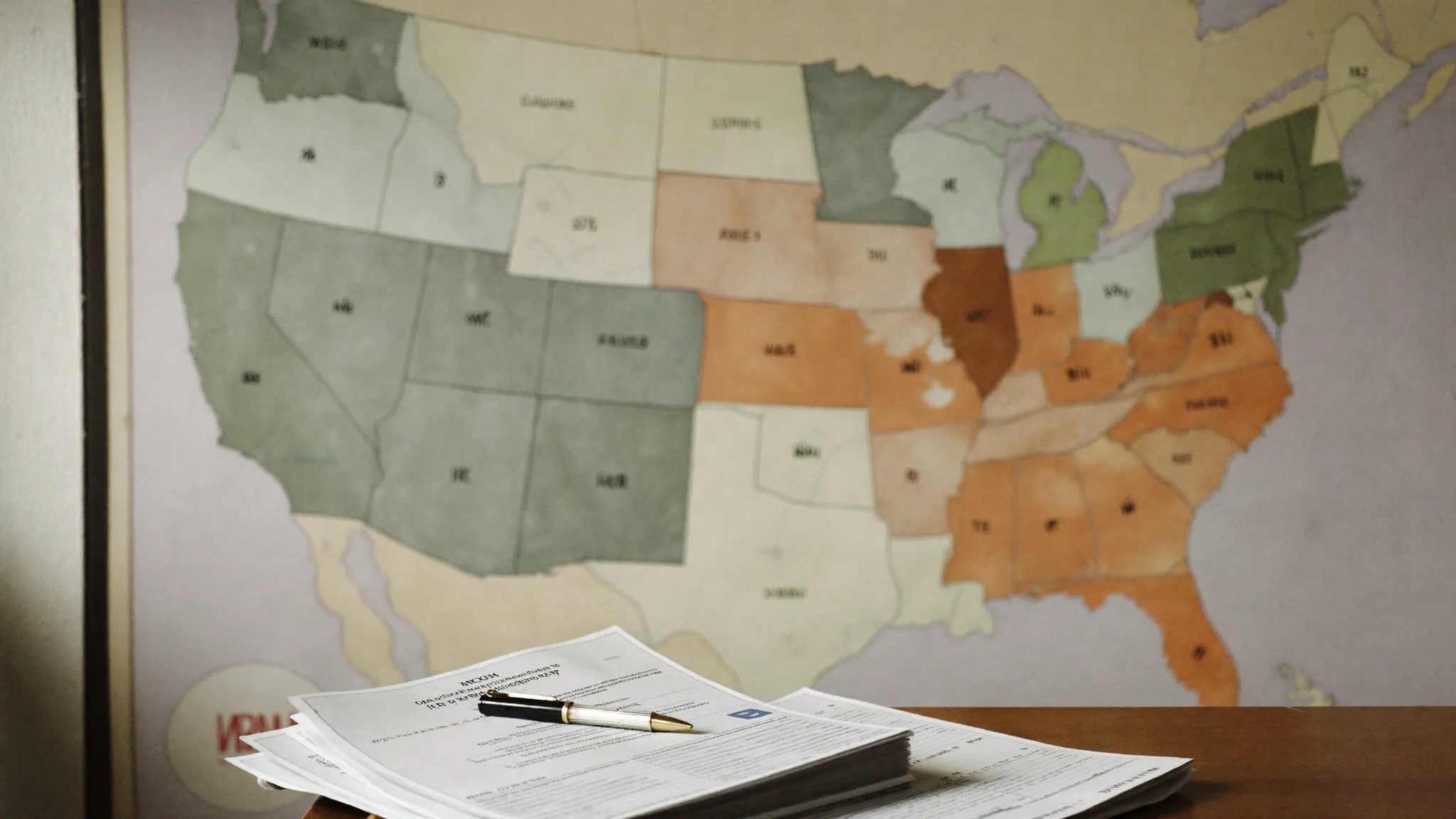
Anyone who has applied for a real estate loan, refinanced, or moved between states has probably hit this question. What is a deed of trust, and how does it relate to a mortgage? Both instruments do the same broad job. Each secures a real estate loan by pledging the property as collateral. Still, they are legally distinct, they involve different parties, and they produce very different foreclosure timelines when a borrower defaults. The choice is set by state law, not by the lender or the borrower. Roughly half the U.S. uses deeds of trust; the other half uses mortgages. Florida is firmly in the mortgage camp. Here is what a deed of trust actually is, how it works mechanically, how it differs from a mortgage, which states use which instrument, and why this matters even if you are buying in Florida.
What Is a Deed of Trust?
A deed of trust is a three-party security instrument used to secure a real estate loan. Three parties sit in a deed of trust. The trustor is the borrower, who takes the loan and pledges the property as collateral. The beneficiary is the lender, who provides the loan and holds the financial interest in repayment. The trustee is a neutral third party, usually a title insurance company or a designated trust officer. That trustee holds legal title on the lender's behalf until the loan is fully satisfied. While the loan is outstanding, the borrower has equitable title and full use of the property; the trustee holds bare legal title as security. When the borrower pays the loan off, the trustee executes and records a deed of reconveyance returning legal title to the borrower.
How a Deed of Trust Differs From a Mortgage
A mortgage, by contrast, is a two-party instrument involving only the borrower (the mortgagor) and the lender (the mortgagee). There is no third-party trustee in the structure. The borrower keeps legal title to the property throughout the loan; the lender holds only a recorded lien against the property. If the borrower defaults, the lender enforces the lien through judicial foreclosure — filing a complaint in court, serving the borrower, and proceeding through a court-supervised process that ends in a judicial sale. With a deed of trust, by contrast, the trustee has the contractual authority to conduct a non-judicial trustee sale of the property without going to court. The non-judicial sale follows the procedure spelled out in the deed of trust itself and in the state's trustee-sale statute.
The Foreclosure Timeline Comparison
The biggest practical difference between a deed of trust and a mortgage is how long foreclosure takes. In a non-judicial trustee sale under a deed of trust, the entire process from default notice to trustee sale typically runs 90 to 180 days, depending on the state. In a judicial foreclosure under a mortgage, the process routinely takes 12 to 24 months, sometimes longer in contested cases or in states with backlogged courts. The judicial process gives borrowers far more opportunity to assert defenses, negotiate workouts, or pursue loss mitigation, but it also locks lenders out of recovery for much longer. The non-judicial process moves quickly but offers fewer procedural protections for the borrower.
Which States Use Deeds of Trust
Roughly half the U.S. uses deeds of trust as the primary security instrument for real estate loans. Major deed-of-trust states include California, Texas, Virginia, Colorado, Arizona, Nevada, North Carolina, Washington, Oregon, Tennessee, Mississippi, Georgia, the District of Columbia, and several others. The other half — including Florida, New York, New Jersey, Pennsylvania, Ohio, Illinois, Connecticut, Indiana, Wisconsin, and others — uses the mortgage system. A small number of states (such as Alabama and Maryland) allow both instruments and the parties pick which to use. The choice is dictated by state real property law and is not negotiable between borrower and lender.
Why Florida Uses Mortgages, Not Deeds of Trust
Florida real estate financing has used the mortgage system since statehood, with roots in English common law that the Florida legislature has retained. FS Chapter 697 codifies the modern Florida mortgage. FS §697.01 goes further still. Any instrument that conveys real property as security for a debt operates as a mortgage here, whatever its label says. So even when an out-of-state lender uses a "Deed of Trust" form on a Florida commercial loan, Florida courts treat it as a functioning mortgage for foreclosure and title purposes. Florida has stuck with the mortgage system for one reason: borrower protection. Judicial foreclosure under FS Chapter 702 forces lenders to prove their case in open court. It also gives borrowers a chance to assert defenses, and it produces a court-supervised sale.
Why a Florida Buyer Should Still Understand Deeds of Trust
Even though Florida itself does not use deeds of trust, the concept matters for several common Florida buyer profiles. Florida snowbirds with second homes in deed-of-trust states need to understand how foreclosure works on their out-of-state property. Florida investors buying short-term rentals in Tennessee, Georgia, North Carolina, or Texas deal with deeds of trust rather than mortgages. So the deal economics depend partly on how quickly a default could be resolved. Florida residents relocating from California or Texas need to know that their new Florida mortgage carries different foreclosure rules than the deed of trust they were used to. Florida-based lenders financing properties in deed-of-trust states have to use the right instrument for the state where the parcel sits.
What This Means When You Buy Out of State
Plenty of Florida owners buy a second property somewhere else, and the instrument changes at the state line.
Ask the closing agent one question early: does this state use a deed of trust or a mortgage? The answer sets your exposure if anything ever goes wrong. In a deed-of-trust state the trustee can usually sell the property without a courtroom, and the whole process may run 90 to 120 days. In Florida the lender has to prove its case to a judge first.
That timeline difference cuts both ways. As a borrower you have far less runway to cure a default in a non-judicial state. As an investor buying distressed property, the same speed is the reason inventory turns over faster there.
The title work barely changes, though. You still get a commitment, you still read Schedule B-II, and you still receive an owner's policy from one of the same national underwriters. Only the security instrument and the foreclosure path differ.
Title Insurance and Security Instruments
Title insurance plays the same protective role under a deed of trust as it does under a mortgage. The lender's title insurance policy protects the lender's lien position — whether that lien is created by a recorded mortgage or by a recorded deed of trust. The owner's title insurance policy protects the buyer against title defects regardless of the security instrument the lender used. The underwriters operating in deed-of-trust states are mostly the same ones operating in mortgage states. The major national carriers include Fidelity National, First American, Old Republic, Stewart, and WFG. Each issues policies under whichever instrument applies in the parcel's state.
Reconveyance vs. Satisfaction at Loan Payoff
When a deed-of-trust loan is paid off, the trustee records a "deed of reconveyance" returning legal title to the borrower. When a Florida mortgage is paid off, the lender records a "satisfaction of mortgage" releasing the lien. Both documents serve the same function — clearing the encumbrance from the public record — but the document name and the responsible party are different. In Florida, the lender (or its servicer) is responsible for recording the satisfaction within 60 days of payoff under FS §701.04. Failure to record a satisfaction creates a phantom lien that can surface years later and slow down a future sale.
Common Misconceptions About Deeds of Trust
A few patterns regularly confuse Florida buyers researching deeds of trust. "Florida lets me choose a deed of trust to speed up foreclosure" — no, Florida law forces the mortgage system on all real estate loans regardless of what the parties prefer. "A deed of trust is the same thing as a deed" — no, a deed conveys ownership; a deed of trust pledges ownership as security for a loan. "Non-judicial foreclosure means the borrower has no rights" — no, deed-of-trust states still provide statutory notice periods, redemption rights in some cases, and the right to challenge the sale in court after the fact. The procedural protections are different, not absent.
Bottom Line
A deed of trust is a three-party security instrument that allows non-judicial foreclosure through a trustee sale — a faster process with fewer procedural protections than the judicial foreclosure used in Florida and other mortgage states. Whether you are closing in Florida or financing a property across state lines, understanding what is a deed of trust helps you compare your options realistically. Verified Title handles Florida closings using the mortgage system, with title insurance backed by top-rated national underwriters across all 67 Florida counties. For more on the Florida closing workflow, see our title services overview, or review the Florida Bar's foreclosure consumer guide at floridabar.org.