Florida was among the first states to authorize remote online notarization. The legislature passed it in 2019 under FS §117.265, and it became operational on January 1, 2020. Five years later, RON has gone from niche to default on a large share of Florida residential closings. Out-of-state buyers, snowbirds, and anyone who would rather skip the drive all use it now. Here is a thorough walkthrough of how remote online notarization works in Florida. It covers who it suits and where it does not work. It also covers what your title company handles behind the scenes.
What Remote Online Notarization Actually Is
Remote online notarization is the electronic signing and notarization of documents through a secure, audio-visual platform with a Florida-commissioned online notary. Instead of meeting a notary in person, you connect via webcam from your computer, tablet, or phone. The notary verifies your identity through technology rather than by examining a physical ID across a desk. Florida law then requires that session to be recorded and stored for ten years. The notarial certificate references the electronic recording and the platform used. Once signed, the documents are legally equivalent to documents notarized in person.
The Legal Foundation Under FS §117.265
Florida's RON statute is one of the most carefully drafted in the country. That is part of why lenders, title underwriters, and county recorders here accept RON closings without friction. The statute requires a notary commissioned by Florida rather than another state. That notary also has to register with the Department of State as an online notary. Location matters too. The signer must sit physically inside the United States, in a U.S. territory, or in a U.S. military installation abroad at the time of signing. The session must be recorded, the recording stored for ten years, and the journal of notarial acts maintained electronically. Identity verification must include two of three permitted methods (typically credential analysis plus knowledge-based authentication). Any document executed under FS §117.265 is treated by Florida law as equivalent to a paper document with a wet-ink notarization.
What You Need to Close Through RON
The hardware requirements are modest — a computer, tablet, or smartphone with a working camera and microphone, plus a reliable internet connection. The identification requirement is firmer. You will need a current, government-issued photo ID — Florida driver license, U.S. passport, state-issued non-driver ID, military ID, or permanent resident card all qualify. You will also need to pass knowledge-based authentication (KBA), which asks five identifying questions generated from your credit and public-records footprint within a two-minute window. The KBA process is the most common point of friction. Buyers with thin credit files, recent address changes, frozen credit, or limited public-records presence sometimes fail the first attempt and have to retry.
Step-By-Step Walkthrough of a Florida RON Closing
A typical Florida RON closing follows a defined sequence.
Roughly 48 to 72 hours before closing, your coordinator emails an invitation to the chosen RON platform along with the closing package for review. You log in, upload a copy of your photo ID, and pass the credential analysis check (the platform analyzes the security features of the ID). On the closing day, you join a live video session with the Florida-commissioned online notary. You pass the KBA quiz within the two-minute window. The notary visually confirms your face matches the ID. You apply your electronic signature and initials where indicated. The notary applies the electronic notarial seal. The session is recorded continuously from beginning to end. Once complete, the title company downloads the executed documents. On financed deals those go to the lender first. Then the deed records electronically with the county clerk over the eRecording network, and the company disburses funds. Total active screen time for the signer is usually 30 to 45 minutes.
What RON Costs and Who Pays
RON rarely changes the price of a Florida closing, which surprises people who expect a technology surcharge.
The notary fee itself is capped by statute. Florida allows a RON provider to charge up to $25 per notarial act, and most closings involve a handful of notarized signatures rather than dozens. Many title companies absorb that cost entirely rather than itemize it.
What you save is often larger than what you spend. An out-of-state seller who would otherwise fly in, or pay for a mobile notary plus an overnight courier both directions, comes out ahead. Mail-away packages also carry a hidden cost in time, because a document signed incorrectly in another state has to travel twice more before it is right.
Ask your coordinator to quote it either way if you are undecided. On a straightforward residential file the difference is usually small enough that convenience decides it.
What Can Go Wrong in a RON Session
Most RON closings run clean, and the ones that do not tend to fail in predictable ways.
Identity verification is the usual culprit. The knowledge-based authentication quiz pulls from credit history, and it asks about old addresses and past accounts. People fail it legitimately, particularly recent immigrants, young buyers with thin files, and anyone who has frozen their credit. A freeze is worth lifting the day before.
Technology accounts for the rest. A weak connection drops the session, and the notary has to restart. An unsupported browser causes the same problem. So test the platform in advance rather than five minutes before your closing.
Occasionally a lender simply refuses RON on a particular loan product. That is not a Florida limitation, it is an investor overlay, and finding out early keeps it from becoming a scramble.
When RON Is the Right Choice
Remote online notarization works particularly well for out-of-state buyers and sellers. Florida snowbirds use it constantly, and so do foreign investors with a U.S. presence and military families. It also suits busy professionals who cannot easily reach a title office, second-home transactions, and refinances where a local borrower simply prefers the convenience. It also suits sellers who relocated out of state before listing. Otherwise they face the cost and disruption of flying in for a single afternoon. Title companies that handle RON regularly can close a deal across multiple time zones without anyone leaving home.
When RON Is Not the Right Choice
RON does not work for every closing. Foreign nationals signing from abroad generally cannot use Florida RON. The statute requires the signer to sit physically within U.S. borders, or in a qualified U.S. territory, at the moment of signing. Some lenders — particularly smaller community banks and credit unions — still require paper closings for their loan documents. Buyers using a power of attorney sometimes need a hybrid signing, especially when the POA itself was executed in a state with stricter notarial rules. And anyone who repeatedly fails KBA may need to fall back to mobile notary or in-office signing. Your title coordinator screens for these issues at the front of the file so the format choice is locked in before the closing date approaches.
Identity Verification — How It Actually Works
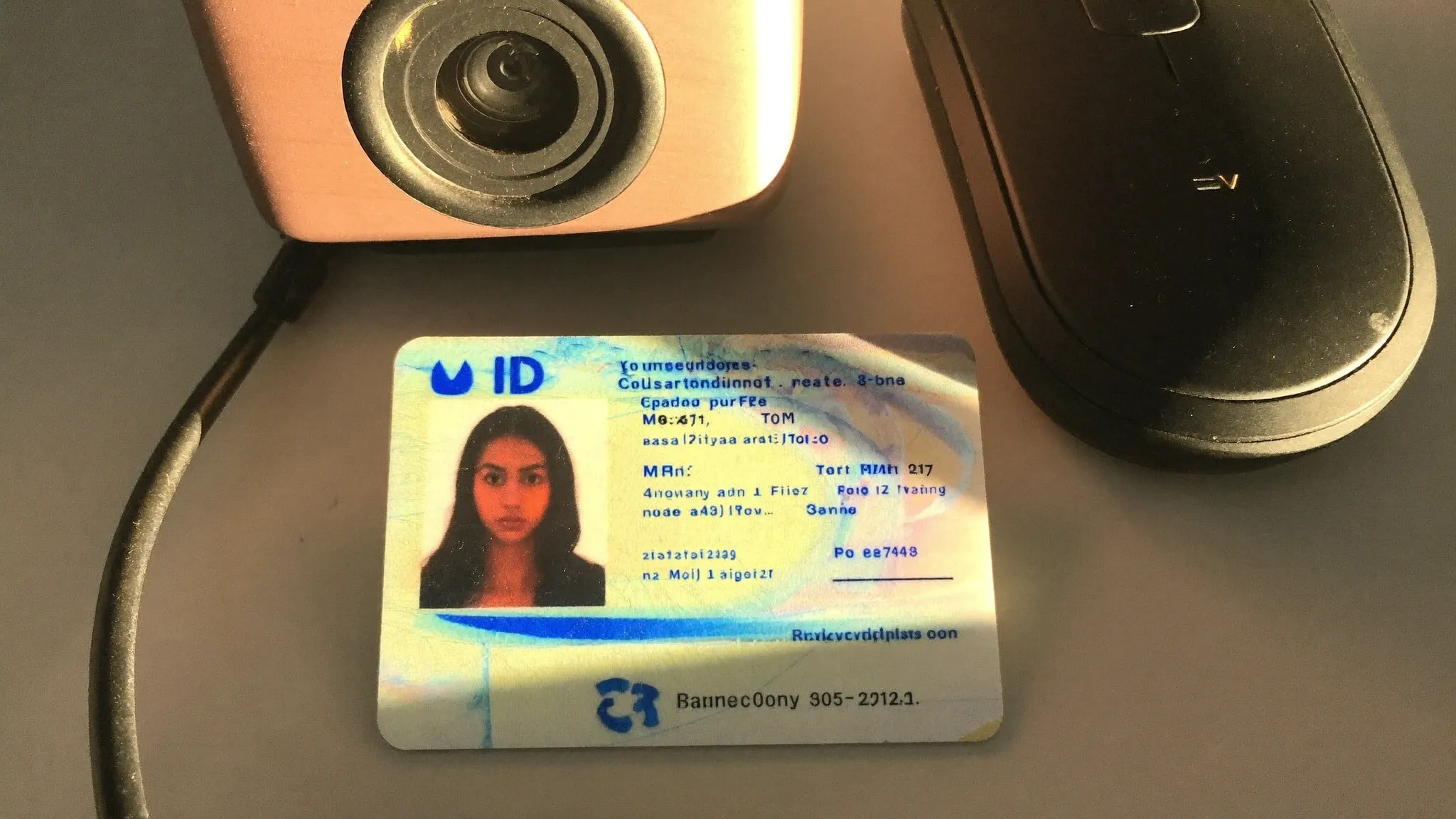
Two layers protect against fraud. Credential analysis runs the uploaded ID through forensic algorithms that check holograms, microprinting, machine-readable zones, and other security features. A doctored or fake ID typically fails this layer instantly. Knowledge-based authentication pulls a quiz from your credit and public-records history — five questions about prior addresses, lenders, vehicle records, and the like. The signer has two minutes total and must answer four of five correctly. Some buyers find KBA easier than expected; others find it surprisingly hard because the questions can reference addresses or accounts from many years ago. If you have frozen your credit (a sensible precaution against identity theft), you will need to lift the freeze temporarily so the KBA system can query your file. Verified Title's coordinators send a heads-up about the credit-freeze step a few days before the closing.
Recording the Deed After a RON Closing
After signing, the executed and notarized documents are transmitted to the title company. The deed and any associated documents are then recorded electronically with the county clerk of court for the county where the property sits. Most Florida counties participate in the eRecording network through Simplifile or CSC. So the deed records within hours of signing, rather than the days a paper mailing would take. The recorded deed comes back with the official book and page number, and you receive your final closing package digitally — typically the same day.
Bottom Line on Remote Online Notarization in Florida
Remote online notarization is a mature, well-tested closing format under Florida Statute 117.265, and a meaningful share of our closings at Verified Title now run this way. It removes geography from the equation, shortens the timeline, and feels surprisingly normal once you have done it once. We close transactions in all 67 Florida counties and offer in-office, mobile notary, and RON signings as standard options. For the full closing service breakdown, see our services overview, or read the Florida Department of State's online notary registration page for the statutory backbone.