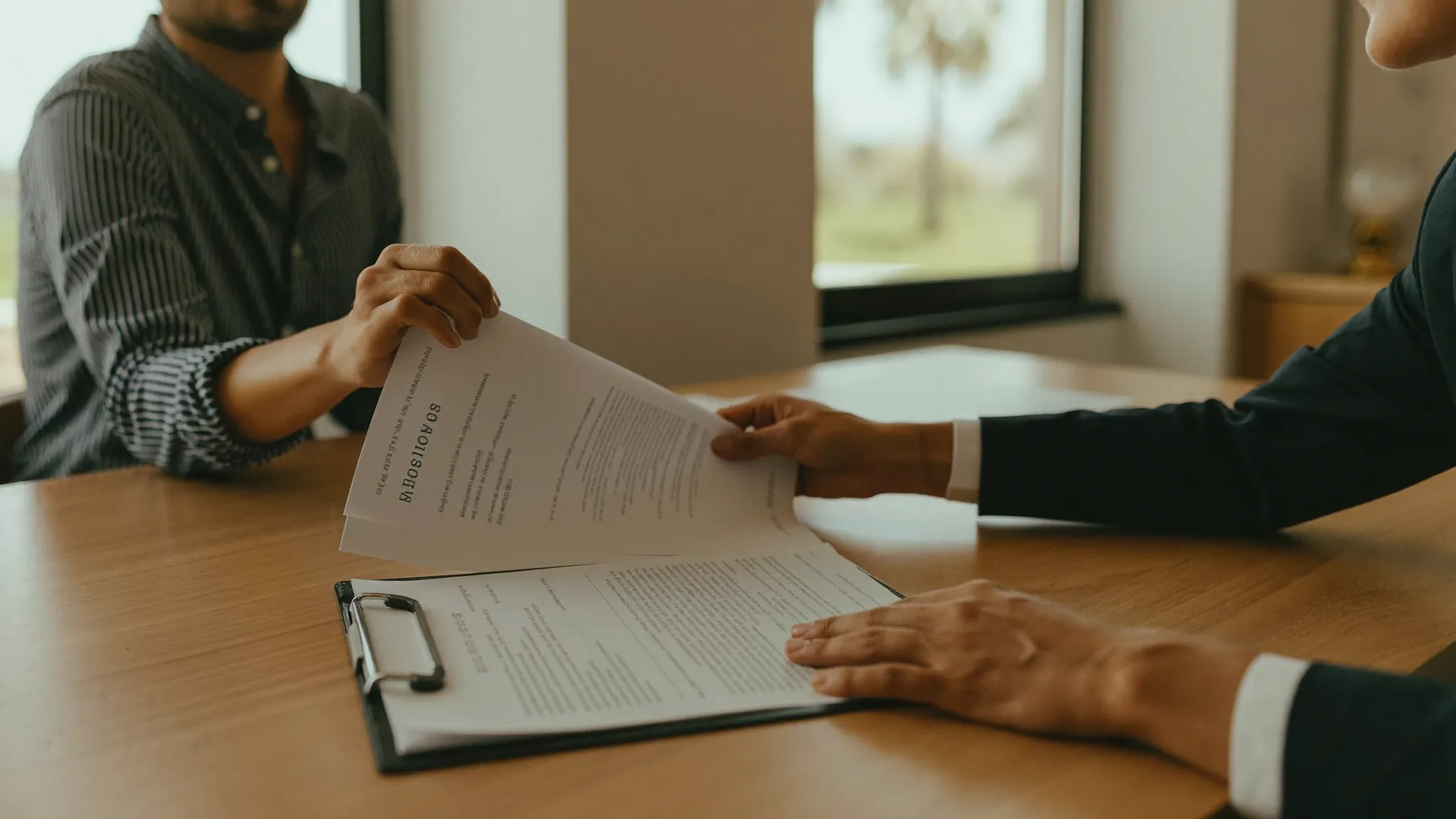
Buyers and sellers regularly ask whether you can sell a house without a title company in Florida. Usually they are hoping to save a few hundred dollars. The deal is often a cash sale between family members or longtime acquaintances. Legally, yes. Florida law does not mandate a title company on a real estate transaction. The longer answer is that nearly every cash-deal seller who skips a title company regrets it once a problem surfaces, and lender-financed deals are functionally impossible without one. Here is what a Florida title company actually does, and what you give up by skipping one. It also covers the narrow set of situations where a buyer and seller can reasonably proceed without one.
What a Florida Title Company Does
A licensed Florida title company runs a long list of tasks that most parties don't even see. The examiner orders and reviews a full title search of the public records going back through the chain of conveyances.
Curative work follows. That team resolves any defect the search turns up, including open mortgages, satisfied liens that were never released, judgment liens, code enforcement liens under FS Chapter 162, divorce-related deed issues, probate gaps. The closer drafts the warranty deed and the closing settlement statement. Meanwhile the escrow officer holds the buyer's earnest money and the lender's wire in a trust account regulated by the Florida Department of Financial Services. At closing, the title company conducts the signing, notarizes the deed, disburses funds to the seller and to lien-holders, and records the executed deed with the county clerk. After closing, the underwriter issues the owner's title insurance policy that follows the buyer for as long as they own the home.
What You Give Up by Skipping
When a buyer and seller try to close without a title company, every one of those protections disappears unless one party arranges it separately. The most common post-closing problems include unrecorded liens that the buyer inherits — tax liens, HOA assessments, mechanic's liens, judgment liens — none of which show up unless someone runs the search. Deed errors such as wrong legal descriptions, missing signatures, or improper notarization can cloud the title for years. Without a neutral escrow agent, disputes over earnest money or proration funds turn into civil suits. Without title insurance, the buyer has no policy to fall back on if a defect surfaces months or years later. The single biggest risk is one neither party usually anticipates: that the seller didn't actually own clean title in the first place, and nobody verified it before the deed was signed.
When a Lender Is Involved, Skipping Is Impossible
If the buyer is using mortgage financing, the lender will require a lender's title insurance policy. That policy can only be issued by a licensed title agent operating under an underwriter. In practice that means a title company has to be involved end to end on a financed deal — the loan won't fund without it. Federally regulated lenders also require RESPA-compliant settlement statements and recorded closing documents, both of which are workflows that title companies handle as a matter of course. Sellers who think they can avoid the title company on a financed sale are confused about what the buyer's lender actually needs to close.
The Rare Cases Where Self-Closing Sometimes Happens
A small number of Florida transactions close without a title company. Cash deals between immediate family members where everyone trusts everyone else and the property is held free and clear. Quitclaim transfers between a married couple or between an estate and an heir. Some intra-business transfers between LLCs with common ownership. Even in these situations, prudent parties usually still order a title search and obtain at least an owner's policy, because the cost of one is small compared to the unknowns. The cases where skipping the title company actually makes sense are rarer than people assume.
What Actually Happens When It Goes Wrong
The argument for skipping a title company always sounds reasonable until you look at how the failures play out.
The most common one is a lien nobody knew about. A contractor recorded against the property in 2019, the seller genuinely forgot, and no search ran. The buyer takes title subject to that lien. Now it is the buyer's debt, and the seller has spent the money and moved.
Undisclosed heirs are the second pattern. An owner died years ago, somebody never opened probate, and the person selling holds only part of the interest. The deed conveys exactly the fraction they own, which is not what the buyer paid for.
Then there is the deed itself. Florida requires two witnesses and a notary on a conveyance. A deed missing a witness gets recorded anyway, because the clerk checks form rather than validity. It surfaces years later, when the buyer tries to sell and their own title agent catches it.

Each of these is fixable through litigation. None is cheap, and all of them take months.
How to Reduce the Risk If You Still Skip It
If the parties are determined to close without a title company, a few steps at least narrow the exposure.
Order a title search anyway. You can buy one without buying a full closing, and it costs a few hundred dollars. Reading that search carefully is the single highest-value thing an unrepresented buyer can do for themselves in the entire transaction.
Pull the municipal lien search too. Code enforcement fines and unpaid utility balances never appear in the clerk's index at all, so nothing else in your file will surface them. Then have a Florida real estate attorney prepare the deed rather than downloading a form off the internet and hoping it fits your situation. The legal description alone is worth the fee.
Finally, do not hand over money without escrow. A neutral third party holding funds until the deed records is the entire mechanism that makes a closing safe. It is also, predictably, the first piece people try to skip, and the one whose absence costs the most when a deal goes sideways.
The Cost Comparison That Matters
Title fees in Florida are promulgated and predictable. The owner's title insurance premium is set by the Florida Office of Insurance Regulation under FS §627.7841 — every licensed agent charges the same rate. For a $300,000 home, the owner's premium runs roughly $1,575. The settlement fee usually falls between $350 and $600. The title search is $150 to $350. Recording and doc stamps are the same whether or not a title company handles the closing. So the total title-side cost for a typical Florida residential closing is a small four-figure number — and it buys you a full search, curative work, escrow protection, and a permanent insurance policy. Compare that to resolving one undiscovered lien after closing. Lien-cure litigation in Florida runs into tens of thousands in attorney fees. It also costs months of time, and you still owe the lien amount itself. There is no real economic argument for skipping.
Attorney Closings vs. Title Company Closings
In some Florida transactions a real estate attorney handles the closing instead of a title company. This is more common in commercial deals and in certain North Florida counties. The attorney still has to order a title search and arrange for title insurance, usually through a relationship with a licensed underwriter. So even an "attorney closing" is really an attorney working with a title underwriter — the underlying functions are the same. The difference is who holds the closing pen and who serves as escrow agent. Both routes produce a recorded deed and a policy. Neither route is the same as actually skipping title services altogether.
Common Misconceptions
Several beliefs lead people to ask whether they can sell a house without a title company. Another version is "it's a cash deal so we don't need one." Cash deals carry exactly the same lien and chain-of-title risk. The buyer's exposure is actually higher, because no lender is double-checking the file. "I've owned the property for 20 years so the title is clean" — long ownership doesn't prevent a previously unrecorded heir or a missed lien from surfacing. Then there is "we can just record the deed ourselves at the courthouse." You can indeed record a deed yourself. Recording it is not the same as confirming the deed is valid, or that the title behind it is clear. The county clerk records what's submitted; the clerk doesn't audit the chain.
Bottom Line
Can you sell a house without a title company in Florida? Technically yes, legally yes, practically almost never. The functions a title company performs — search, examination, curative, escrow, closing, recording, and insurance — are the load-bearing structure of every safe Florida real estate transaction. Verified Title handles residential and commercial closings across all 67 Florida counties, and we can quote your closing in plain numbers before you sign a contract. For more on what the closing workflow actually includes, see our title services overview, or review the Florida Department of Financial Services consumer guide at myfloridacfo.com.