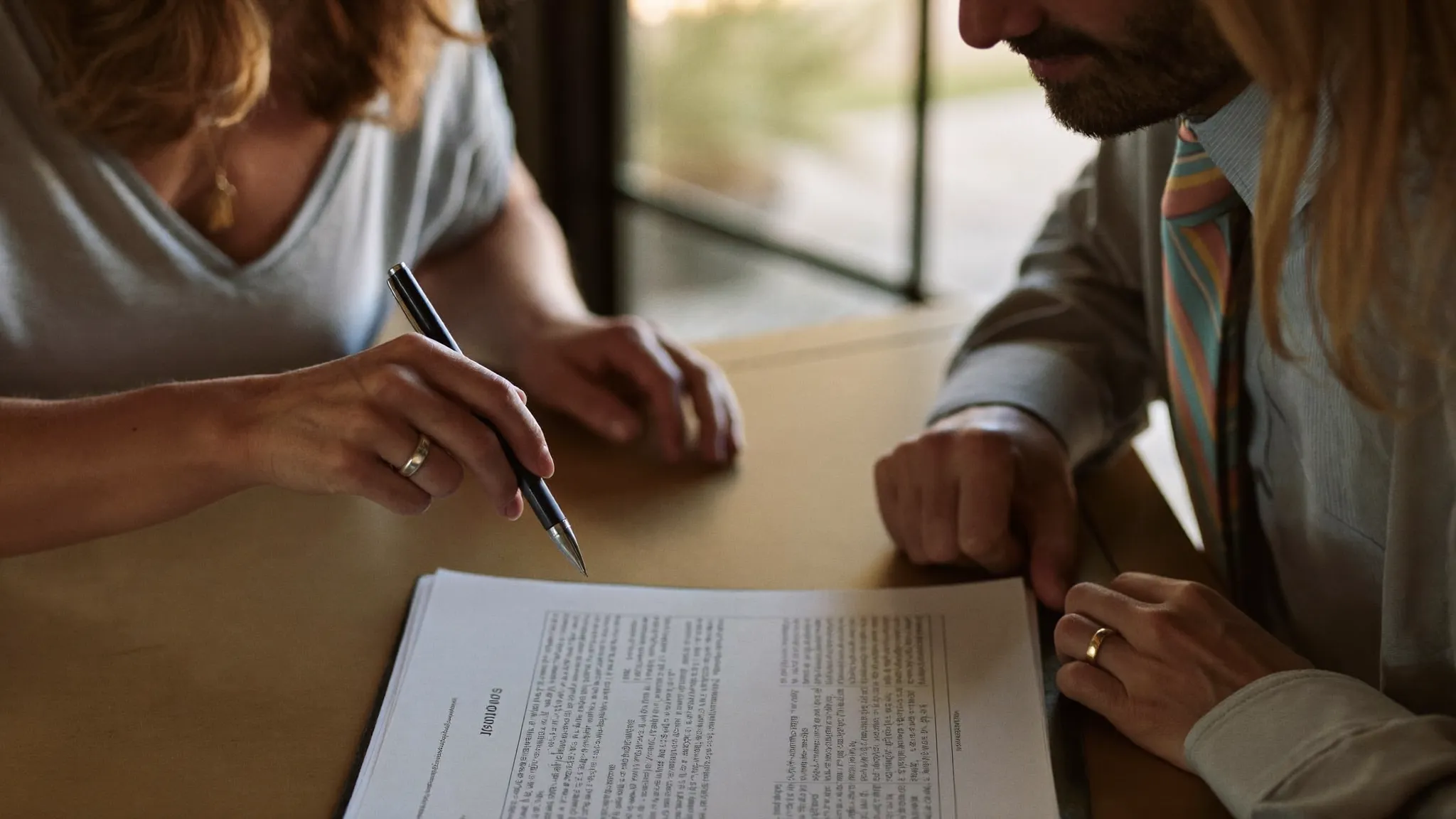
One of the most common questions our title coordinators field is whether a spouse can sell a house without permission in Florida. The short answer is that it depends almost entirely on whether the property is the couple's homestead. Florida has some of the strongest spousal protections in the country when it comes to the family home, and those protections are built into the state constitution itself — not just statutory law. Here is how the rule actually plays out at the closing table. It covers what the title company verifies before issuing a policy. It also covers the narrow situations where one spouse really can convey without the other.
The Constitutional Foundation
Florida homestead law sits at the intersection of Article X, Section 4 of the Florida Constitution and FS §689.111. Together, these provisions say that a married person cannot sell, mortgage, or otherwise alienate homestead property without the joinder of the other spouse. "Joinder" in this context means the non-titled spouse must sign the deed as a joining grantor — not merely as a witness. The rule applies even when only one spouse appears on the original title and even when the non-titled spouse never contributed a dollar to the purchase. The protection runs to the marriage itself, not to the individual title interest.
Why the Rule Exists
The spousal consent requirement was written into Florida's constitution to prevent one spouse from selling the family home out from under the other. It is a deliberate brake on unilateral action. Without it, a titled spouse could in theory close on a sale, pocket the proceeds, and leave the non-titled spouse with no recourse beyond a slow civil action. The constitutional drafters considered that outcome unacceptable for property used as the family residence, and the courts have enforced the joinder rule strictly ever since.
When a Spouse Can Sell a House Without Permission
There is a narrow set of fact patterns where one spouse really can sell a house without permission from the other in Florida. First comes non-homestead property. A rental, a second home, a flip, or a commercial parcel all fall outside the homestead rule. If only one spouse appears on that deed, that spouse can generally convey alone. Second comes divorce. If a final judgment of dissolution allocated the property to one party, that spouse can sell without the other's signature. The title company will still want the recorded decree in the file. Third, if a properly executed and recorded postnuptial agreement explicitly waives the joinder right, some Florida title underwriters will accept the waiver — though this is rare in practice and typically requires underwriter sign-off in advance.
What the Non-Signing Spouse Should Know
The rule protects the spouse who is not on the deed, and that spouse often has no idea the protection exists.
You do not need your name on the deed to have rights in Florida homestead property. Article X, Section 4 gives you a say in the conveyance regardless. Your signature is required, and a deed executed without it is voidable at your election rather than merely awkward.
That matters most when a marriage is going badly. A spouse who lists the house alone, accepts an offer, and reaches the closing table will discover the title company needs you there. No reputable Florida agent issues a policy without the joinder, because the underwriter will not stand behind it.
If somebody has asked you to sign a deed you do not understand, slow down and ask questions before anything gets notarized. Ask which property it conveys, then read the legal description line by line before you agree to anything. Ask whether the property is homestead, and ask what you receive from the sale. A title coordinator will answer all three questions without charging you a fee, and so will your own attorney if you would rather ask one.
What Happens When One Spouse Cannot Sign
Sometimes the joinder is not refused, it is simply impossible, and Florida has paths for that.
Incapacity is the most common. If a spouse has dementia or is otherwise unable to execute documents, a properly drafted durable power of attorney can authorize an agent to sign. The title company will want the original instrument and will confirm it has not been revoked. Where no power of attorney exists, a guardianship proceeding may be the only route, and that takes months rather than weeks.
Military deployment is easier. A specific power of attorney executed before deployment usually handles it, and many base legal offices prepare these routinely.
A missing spouse is the hardest case. If you genuinely cannot locate them, the path runs through the courts, and you want an attorney rather than a title coordinator. Tell your title company early either way, because the answer shapes your entire timeline.
What the Title Company Verifies
Before a Florida title company issues a commitment on a sale where the seller is married, the file runs through a marital-status review. The coordinator asks the seller's marital status as of the contract date and the closing date. Next, the examiner pulls the property appraiser's homestead status to confirm whether the parcel qualifies as homestead today. The closer reviews any divorce decrees, premarital agreements, or death certificates supplied by the seller. If anything is unclear, the title underwriter requires a "marital affidavit" — a sworn statement from the seller affirming current marital status and homestead status. The underwriter relies on that affidavit when issuing the policy, and any false statement in it is grounds for both policy rescission and a separate fraud claim. This verification is one of the most important things a Florida title company does on every residential file.
What Happens If a Deed Is Signed Without Spousal Consent
When homestead property is conveyed without the required joinder, the deed is voidable — not void. The distinction matters. A voidable deed is valid until the non-signing spouse takes affirmative legal action to set it aside. The non-signing spouse can sue to invalidate the conveyance, and Florida appellate courts have repeatedly upheld those challenges. A buyer who closes on homestead property without proper joinder ends up holding defective title. Standard owner's title insurance generally covers the buyer in this situation because the missing signature is exactly the kind of recording-era defect the policy was designed to insure. The insurance pays the loss, the underwriter then pursues the seller and the closing agent who allowed the defective conveyance to record. This is why title companies guard the joinder requirement so carefully — the underwriter's losses fall directly on the closing professionals who missed the issue.
Common Fact Patterns That Trip People Up
Several situations regularly create problems on Florida closings. A seller who has been separated for years but never legally divorced is still married for purposes of the joinder rule, and the absent spouse must still sign or the homestead status must be formally rebutted. Remarriage causes the same problem. A seller who now occupies the home with a new spouse triggers the joinder requirement even if the title deed predates the marriage. A seller who quietly moved out of the home and rented elsewhere may believe homestead is gone — but the property appraiser may still show homestead as active, and the title underwriter follows the recorded status. Incarceration and hospitalization change nothing either. That seller still needs the signature, and a power of attorney can substitute only if it specifically authorizes conveyance of homestead and was properly recorded. Each of these patterns slows down a closing while the title company resolves the underlying question.
Divorce, Death, and Conveyance Authority
A finalized divorce ends the joinder requirement for the spouse who no longer holds an interest in the property under the final judgment. The title company will still pull and review the recorded judgment to confirm the allocation. After a spouse dies, Florida homestead inheritance rules take over under Article X, Section 4(c) and FS §732.401. The surviving spouse may hold a life estate, or a tenancy in common instead. Which one depends on whether minor children survive, and on whether anyone filed an election. Selling after death almost always involves a probate filing or a summary administration, and the title company has to reconstruct ownership before issuing a clean policy. The earlier a seller brings these facts to the title company, the smoother the closing runs.
Bottom Line
So can a spouse sell a house without permission in Florida? For most married sellers, the answer is no. Homestead property requires the joinder of both spouses, and Florida allows no exception to it. The title company verifies that requirement before it issues any policy. The narrow exceptions for non-homestead property and finalized divorces are real but tightly drawn. Verified Title coordinates marital-status review and homestead verification on every applicable closing across all 67 Florida counties, and our team can answer joinder questions before you sign a contract. For more on the closing workflow, see our title services overview, or review the Florida Bar's homestead guidance at floridabar.org.